My notes on agentic AI, drug discovery, and teaching
- machine learning
- drug discovery
- target discovery
- book
- agents
- teaching
- writing
- launch
- target discovery
- book
•
•
•
•
•
•
•
•
•
-
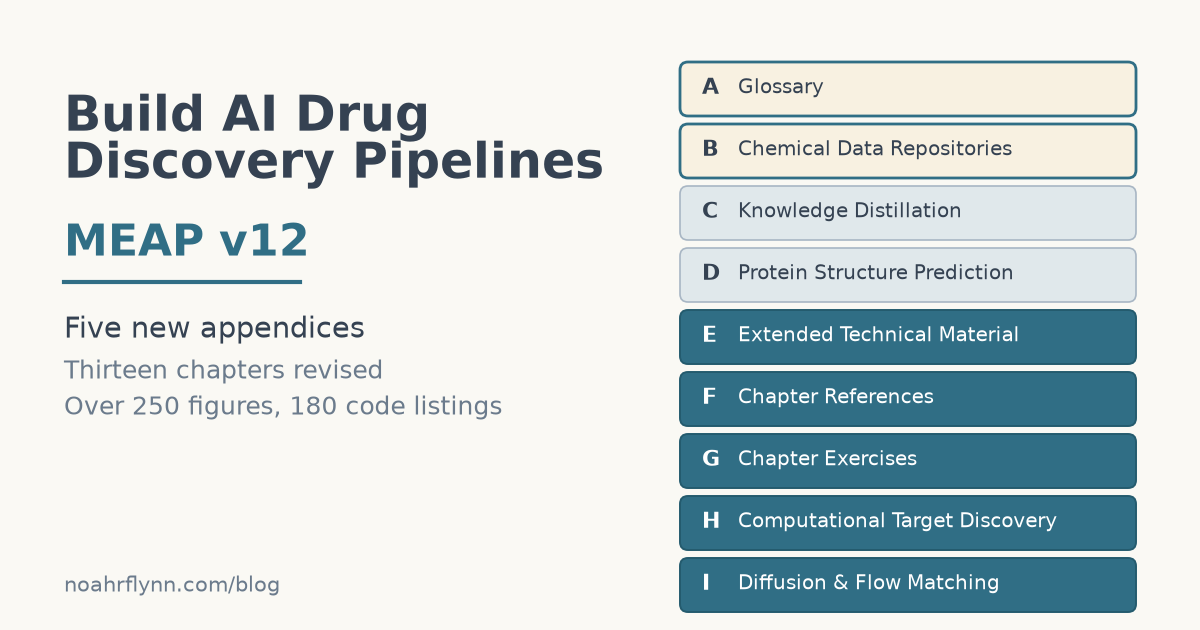
Build AI Drug Discovery Pipelines, MEAP v12: five new appendices and the last update before production
What changed in version 12: new appendices on computational target discovery and on diffusion and flow matching, a rebuilt glossary and data catalog, 87 exercises, and code for Chapter 13.
-
Virtual cells for target discovery, perturbation models, and benchmarks
Virtual cell models try to predict how cells respond to genetic and chemical perturbations. A practitioner's guide to what they can do for target discovery, what the benchmarks say, and where the current limits still matter.
-
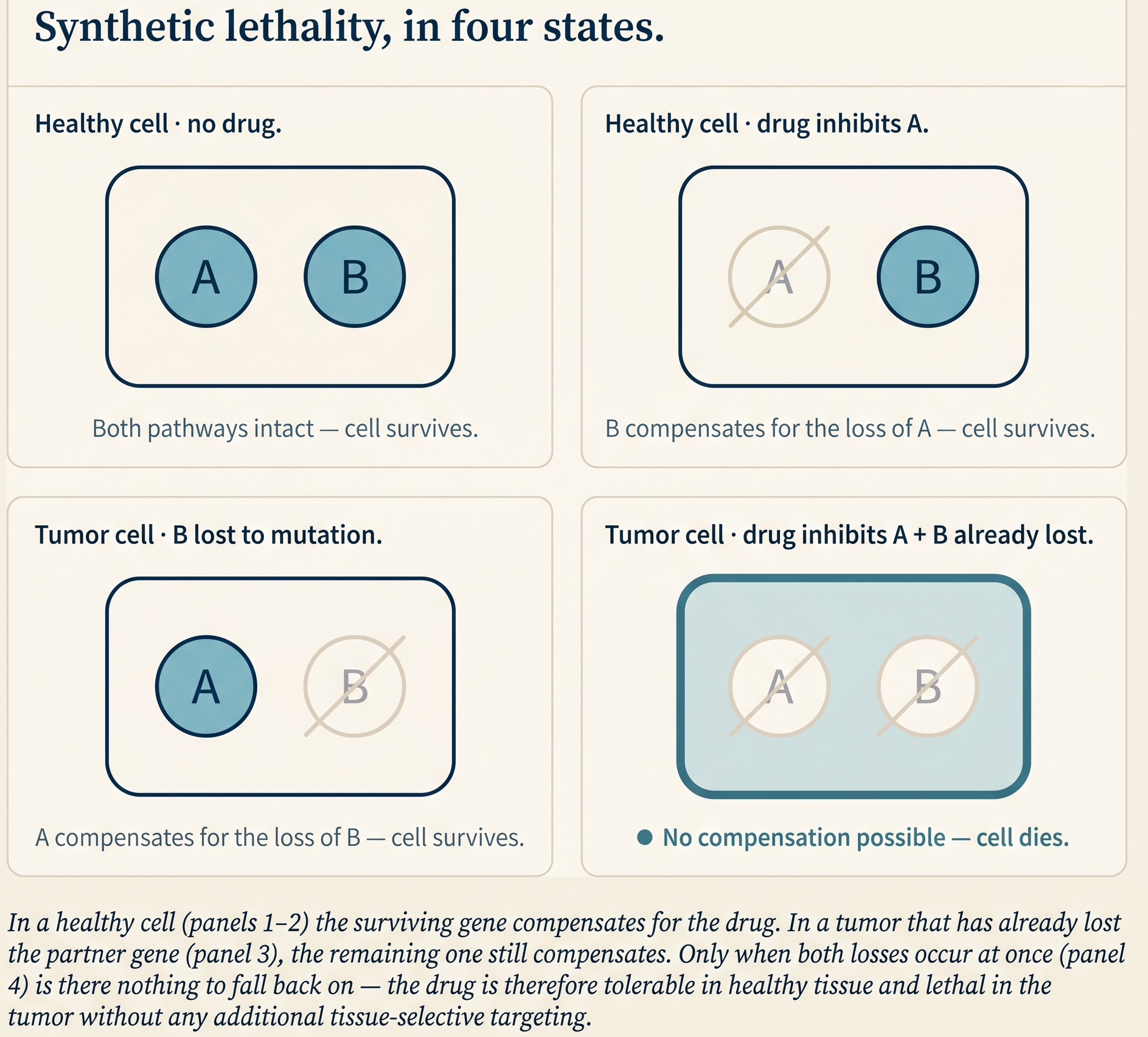
Synthetic lethality and combination targets: ML methods for finding drug pairs that work together
Synthetic lethality turns a drug-target problem into a target-pair problem. Which ML methods find the pairs? CRISPR screens, DAISY, SynLethDB, and GNN link prediction.
-
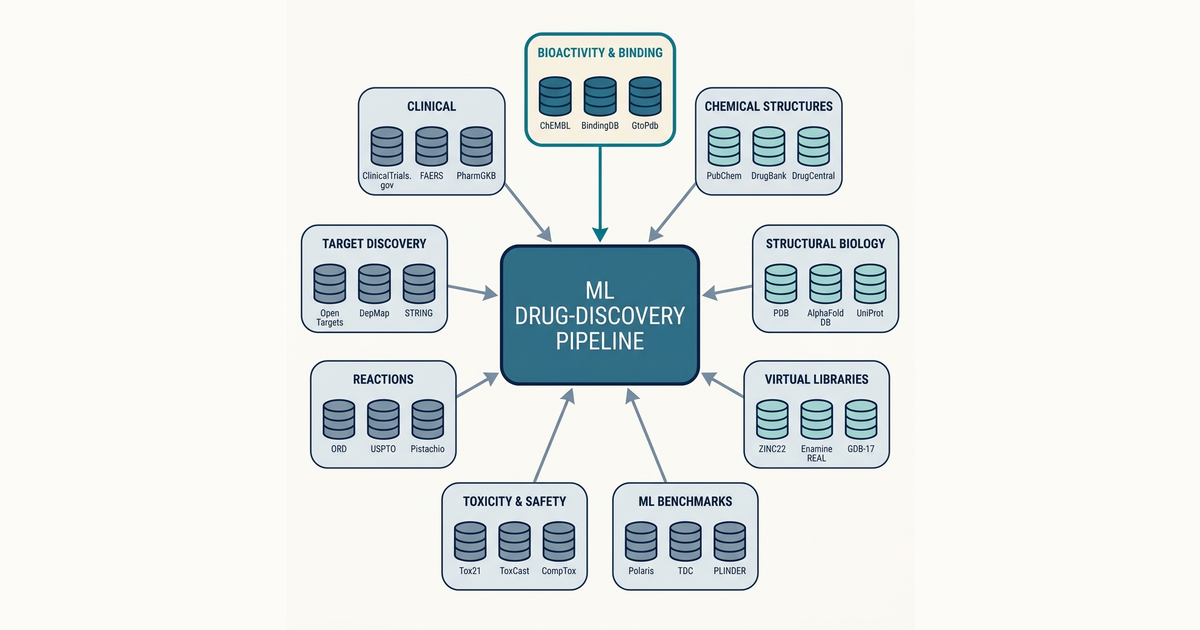
Chemical and Biological Data Repositories for AI Drug Discovery
A maintained catalog of publicly accessible chemical and biological data repositories for machine learning in drug discovery, with notes on the data-quality properties to verify before training a model.
-
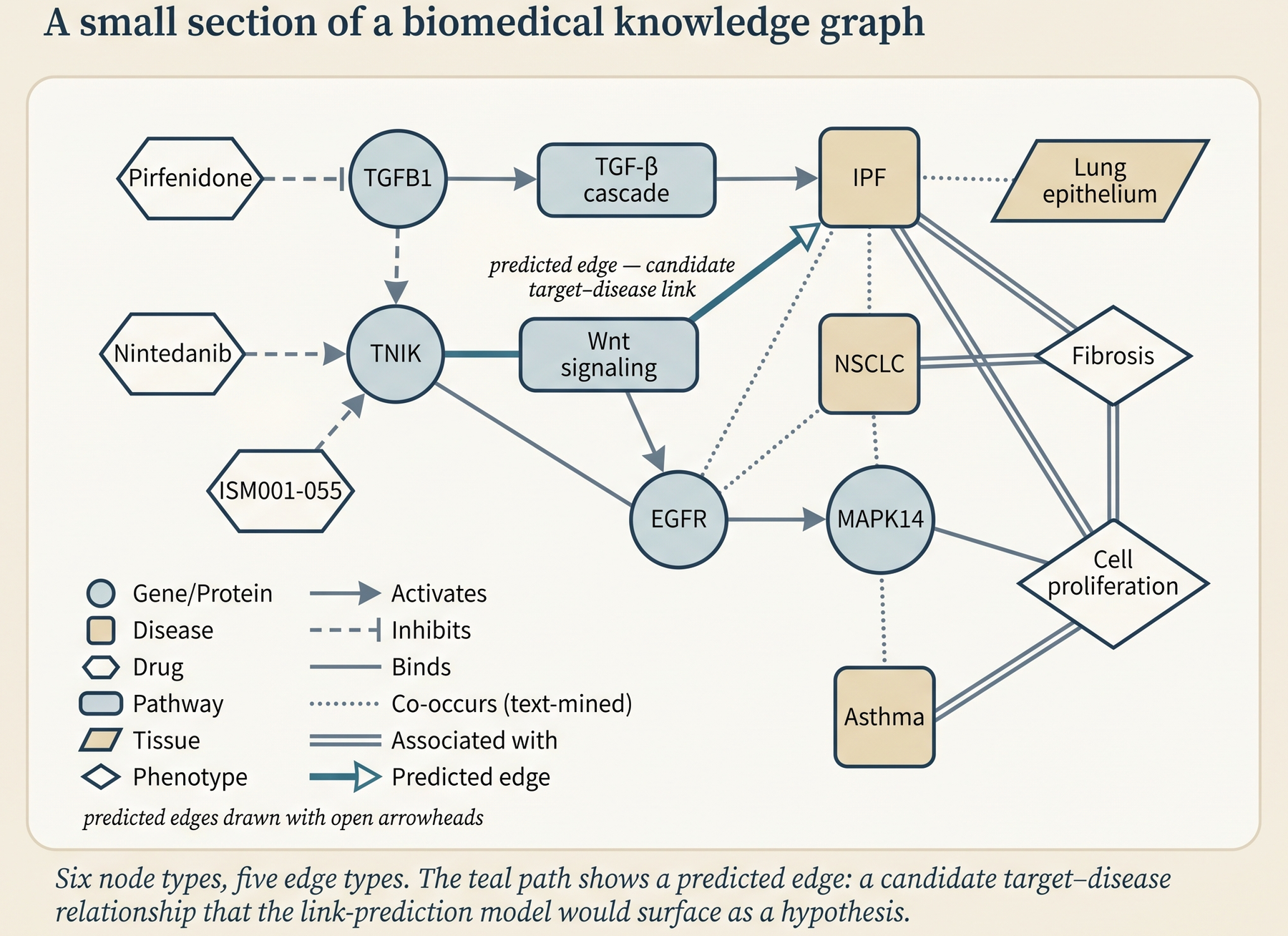
Knowledge graphs, network medicine, and the first end-to-end AI-discovered drug: a target-discovery case study
Rentosertib is the first end-to-end AI-discovered drug to show a Phase 2 efficacy signal. This post examines the knowledge graph that identified TNIK and the program that followed.